
Dental Implants
Interested? Book Your Free Consultation
No cost, no obligation
Free Implants Consultation
A relaxed, no-pressure 15-minute chat with our team to find out if dental implants are the right way to replace your missing teeth.
* Free consultation covers implant treatment planning and advice; further diagnostic imaging (such as a CT scan) or a full comprehensive examination may incur a separate fee if required.
Free Implants Consultation
No cost, no obligation
Free Implants Consultation
A relaxed, no-pressure 15-minute appointment to discuss missing or failing teeth with our experienced team. We'll assess your jaw and gum health, talk through your concerns, and recommend the implant solution that suits you best.
* Free consultation covers implant treatment planning and advice; further diagnostic imaging (such as a CT scan) or a full comprehensive examination may incur a separate fee if required.
Book NowDental Implants, A Long Lasting Tooth Replacement Solution
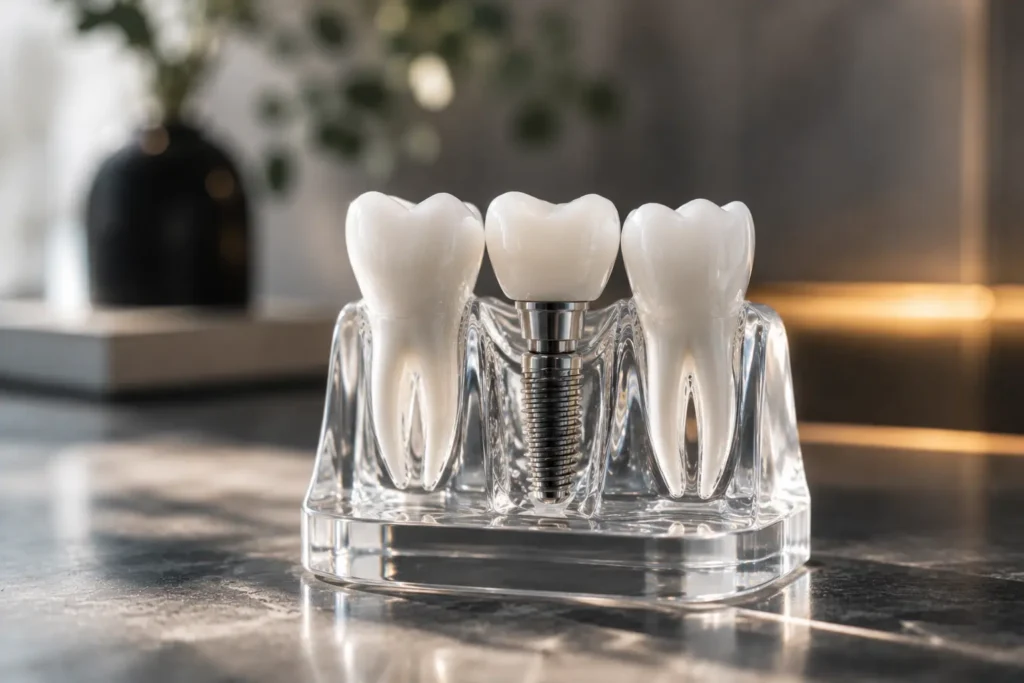
A missing tooth is more than a gap. Once nothing is loading that part of the jaw, the bone that used to hold the tooth starts to shrink, and over a few years that changes how your other teeth sit and how your face looks around the mouth. Implants are the one replacement that puts a stop to it, because the post fuses to the bone and keeps it doing its job.
That’s also why they feel the way they do. Nothing to take out at night, nothing clipped onto the teeth either side. You brush it along with everything else and after a while you forget which one it is.
We do single teeth, a few at a time, and full arches for people who’ve lost most or all of theirs. Which of those suits you depends less on what you’d like and more on what your jaw can support, so we start with digital imaging and a proper look at your gums and bone. If there isn’t enough bone there to hold an implant, we’ll tell you what has to happen first rather than press on and hope.
You’ll have the full plan, the stages and the cost in front of you before anyone starts anything.
Interested In Dental Implants? Book Your Consultation Today
Book Your Appointment Today
We offer free cosmetic consultations
Who Can Benefit from Dental Implants?
Dental implants aren’t a one-size-fits-all treatment. They’re suited to a range of situations, from a single missing tooth to a full mouth restoration. Select an option below to see how implants could help you specifically.
Who benefits
Missing one or more teeth
Teeth go for all sorts of reasons. Decay, an accident, an extraction that couldn't be avoided. An implant puts back the root as well as the part you can see, and that root is what keeps the bone underneath in use instead of slowly shrinking away. Nothing needs filing down to hold it in place either, so the teeth on both sides are left alone.
Teeth go for all sorts of reasons. Decay, an accident, an extraction that couldn't be avoided. An implant puts back the root as well as the part you can see, and that root is what keeps the bone underneath in use instead of slowly shrinking away. Nothing needs filing down to hold it in place either, so the teeth on both sides are left alone.
A denture that slips while you're eating, or clicks when you talk, wears thin pretty quickly. Implants can anchor the denture you already have so it stays where it should, or replace it with a fixed set that stays in your mouth all the time. Most people notice it first at dinner, when they stop planning meals around what the denture can handle.
Crowns and bridges don't last forever, and there comes a point where doing the same repair again isn't worth your money. An implant starts down in the bone instead, so you're building on something solid rather than on a tooth that's running out of structure. It also takes the load off the teeth that were holding a bridge up.
You don't need an implant for every tooth. A small number of them, put in the right places, can carry a whole arch of fixed teeth that stay in your mouth day and night. It's a bigger undertaking than a single implant, so we'll go through the stages, the healing time and the cost properly before you decide anything.
What Types of Dental Implants Are There?
There are two ways we do dental implants at Smile Connections, and which one suits you comes down to how many teeth are missing.
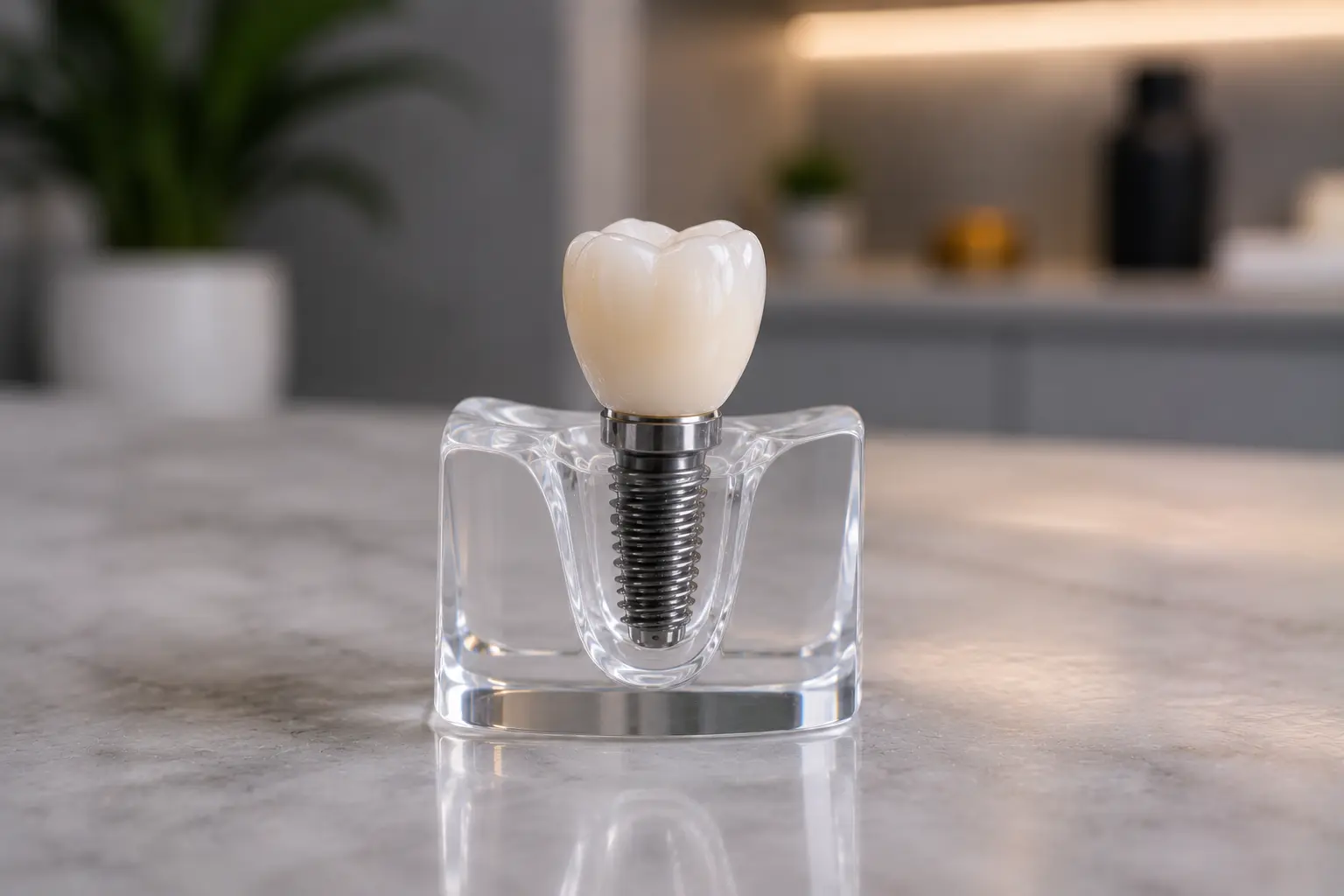
For a single tooth, one implant handles it on its own. The post goes in where the root used to be, the crown sits on top, and the teeth either side don’t get touched.
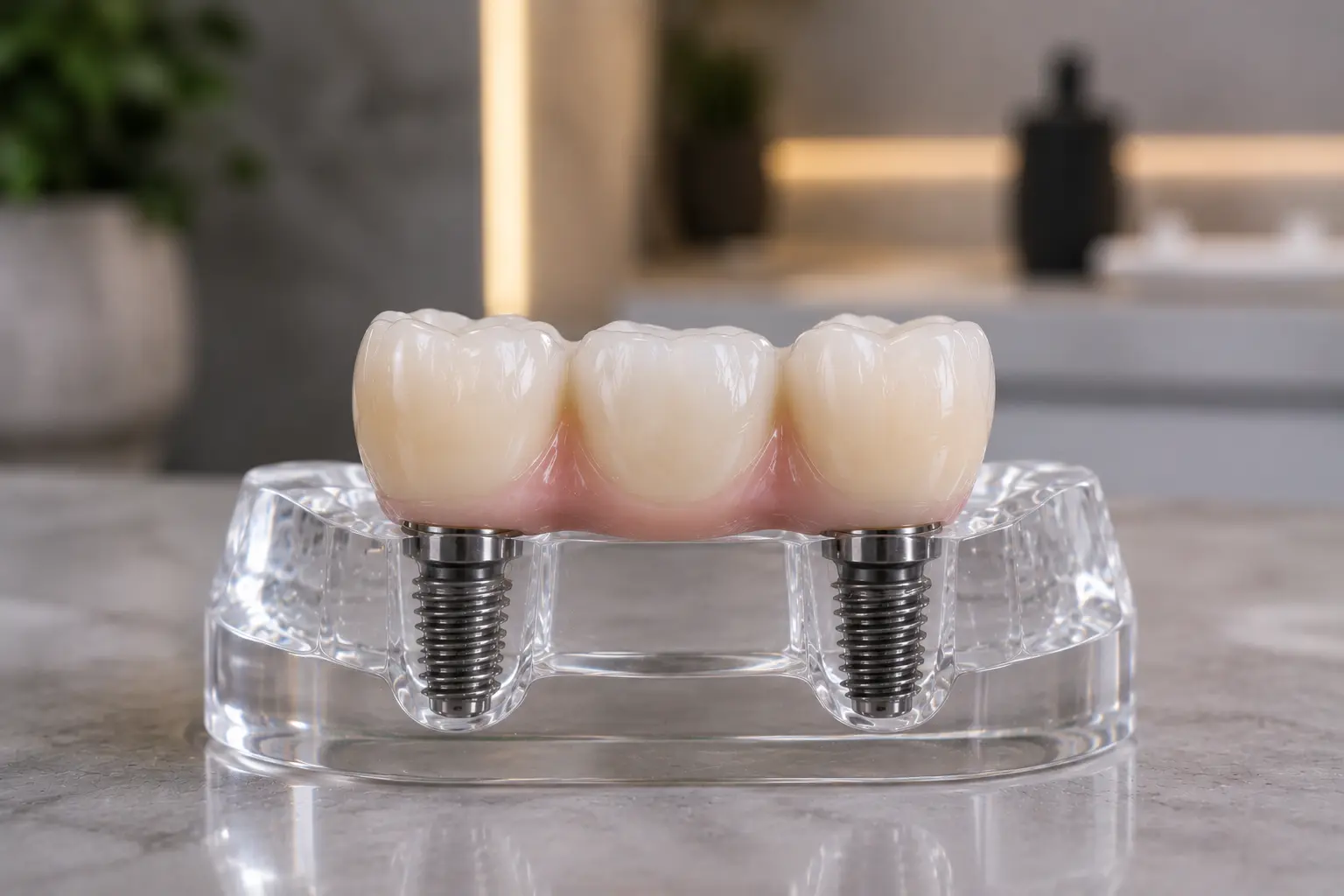
For a run of missing teeth next to each other, we use an implant bridge. Two implants, one at each end, can carry a span of replacement teeth across the middle, so you’re not paying for a separate implant in every gap. Fewer posts, same fixed result, and nothing you take out at night.
Single implants
For one missing tooth. A titanium post goes into the jawbone where the root used to sit, and once it has healed in we fit a crown on top that's matched to the colour of the teeth around it. The teeth on either side aren't touched at all.
Implant bridges
For a few missing teeth in a row. Two implants, one at each end, carry a fixed bridge of teeth across the gap between them. You get your bite back without paying for a separate implant in every space.
What's The Process Of A Dental Implant?
Getting an implant often takes a few months from beginning to end, and most of that time is waiting rather than treatment. The bone has to grow around the post and lock it in place, and there’s no way to hurry that part along.
There are six stages to it. None of them involve long appointments, and you’ll know what’s happening at each one before you’re in the chair. Here’s how it runs.
Step 01 of 06
The first visit
We check your mouth, take x-rays and a 3D scan, and see how much bone there is to work with. That last part decides most of what follows. We'll also ask what you want out of it, because replacing a back molar you chew on and replacing a front tooth people can see are two different jobs.
Working out your plan
We come back to you with what we'd recommend. How many implants, what type, how long it will take and what it costs. If you need a bone graft before anything else can happen, you'll hear about it now rather than halfway through.
Placing the implant
This is done under local anaesthetic, so you're awake but you won't feel it. We open the gum, set the post into the bone and close it back up. Most people tell us the appointment was easier than they'd built it up to be, and it's the tenderness for a day or two afterwards they notice more than the procedure.
The healing wait
This is the long part. Over roughly 3 to 6 months the bone grows onto the post and grips it. You can't hurry it and you won't feel it happening. If the gap is somewhere people can see, we can fit a temporary tooth so you're not walking around with a space in the meantime.
Fitting your crown
Once the post is solid, the crown goes on top of it. It's made to match the shade of the teeth around it, and from that point you use it like any other tooth. No special care, no taking it out.
Checking in afterwards
We'll see you again to make sure the implant and the gum around it are healthy. After that it's the same as the rest of your teeth. Brush, floss and keep up your regular check-ups. Implants can't get decay, but the gum around them can still get infected if they're neglected, so they're not a set and forget.
Services We Offer
General Dentistry
When a tooth is damaged, decayed, or broken, restorative treatment can get it back to full function. We offer fillings, crowns, bridges, and root canal treatment to repair the tooth.
Children's Dentistry
Children’s dentistry is all about building healthy habits early, helping little smiles grow strong with gentle, friendly care that keeps kids calm and confident at every visit.
Dental Implants
Dental implants are the gold standard for a permanent, natural-looking replacement. At Smile Connections, we’ll have you smiling with confidence again.
Veneers
Veneers are a simple way to completely transform your smile, covering imperfections with thin, custom-made shells for a flawless, natural-looking result.
Clear Aligners
Straighten your teeth without the metal brackets. Clear removable aligners gradually shift your teeth into place without anyone even noticing.
Teeth Whitening
Teeth whitening is one of the fastest ways to refresh your smile, using professional-grade treatment to safely lift stains and reveal a brighter, more confident you.
Payment Plans
Interest-free Payment Plans
Flexible payment plans, designed to make treatments more manageable.
General Dentistry Cosmetic Dentistry Family Dentistry
Book Your Appointment Today
We offer free cosmetic consultations
FAQs
How much do dental implants cost?
The cost of dental implants depends on how many teeth are being replaced and whether you need a single implant or an implant bridge. Because every case is different, we provide personalised quotes during a free consultation, and offer interest-free payment plans to help make treatment more manageable.
How long do dental implants last?
With good oral hygiene and regular check-ups, dental implants can last a lifetime. The crown on top may need replacing after 10–15+ years of wear, but the implant itself, once fused with your jawbone, is designed to be a permanent, long-term solution.
Are dental implants painful?
The implant placement procedure is performed under local anaesthesia, so most patients feel little to no discomfort during treatment. Some mild soreness or swelling is normal for a few days afterwards, similar to having a tooth extracted, and is easily managed with over-the-counter pain relief.
Am I a candidate for dental implants?
Most healthy adults with adequate jawbone density and healthy gums are suitable candidates for dental implants. The best way to know for sure is a consultation with our Ivanhoe team, where we’ll assess your jaw health using x-rays and 3D imaging before recommending the right treatment plan for you.
What's the difference between a single implant and an implant bridge?
A single implant replaces one missing tooth on its own, without affecting the teeth beside it. An implant bridge is used when several teeth in a row are missing. Two or more implants anchor a fixed bridge of replacement teeth, so you don’t need an implant for every gap.
Do dental implants require special care?
Dental implants are cared for just like natural teeth. Regular brushing, flossing, and routine dental check-ups. We also schedule a complimentary follow-up appointment after treatment to monitor your implant and make sure it’s healing and functioning as it should.