
Gum Disease Treatment
Interested? Book Your Appointment Today
Appointment
Gum Disease Treatment
Treat gum inflammation and infection early to protect the teeth and bone underneath, before it has a chance to progress.
* Treatment is confirmed after an examination; the approach required will vary depending on the stage and severity of the gum disease.
Appointment
Gum Disease Treatment
Treating gum inflammation and infection before it progresses.
Gum Disease Treatment
Whether it's early gingivitis or more advanced periodontal disease, our team will assess the health of your gums and bone and recommend the right level of care, from a thorough deep clean through to ongoing periodontal maintenance, so your gums stay healthy for the long run.
* Treatment is confirmed after an examination; the approach required will vary depending on the stage and severity of the gum disease.
Book NowGum Disease Treatment, Catching It Before It Progresses
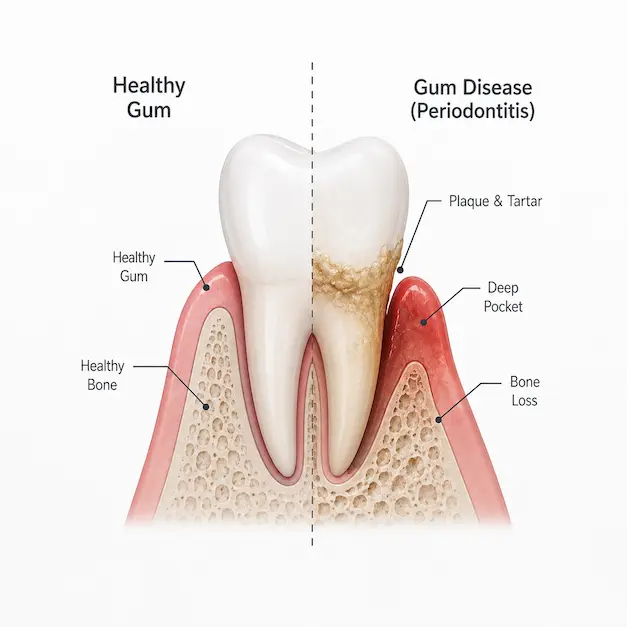
Bleeding gums aren’t something to just brush off. At Smile Connections, we catch gum disease at whatever stage it’s at, whether that’s early gingivitis or something more advanced, and build a plan around getting it back under control. It’s one of the most common issues we see, because plaque and tartar build up quietly under the gumline long before you’d notice anything’s wrong. Beyond the early signs, treatment also covers ongoing periodontal maintenance for gums that need ongoing care, and addressing ongoing bad breath that won’t shift with brushing alone.
Interested? Book Your Consultation Today
Book Your Appointment Today
Comprehensive General Dentistry
What's The Process Of Treating Gum Disease?
Gum treatment works a bit differently to most things we do. There’s no single appointment that fixes it and closes the book. Some people settle down after one deep clean, others do better with regular upkeep, and which one you turn out to be depends on how your gums respond. We’ll tell you what we’re doing at each stage and where you’re sitting after each one.
Step 01 of 04
Looking at your gums
We start with a careful look at your gums to see which areas need attention and how well they're holding your teeth. X-rays let us check the bone underneath at the same time, since that's the part nobody can see from the outside.
What we found, and the plan
We'll tell you plainly where things stand and put a plan together that suits your situation. For some people that means one deep clean. For others it's a couple of visits followed by regular upkeep.
The deep clean
A thorough clean below the gum line, clearing the buildup a normal clean can't reach. That gives your gums the chance to settle and tighten back against the teeth. We can numb the area first if you'd prefer, and plenty of people do.
Keeping on top of it
Once your gums are back in good shape, regular check-ins keep them there and pick up anything creeping back before it takes hold. We'll also show you what makes the most difference at home, which is usually one or two changes rather than a whole new routine.
Services We Offer
General Dentistry
When a tooth is damaged, decayed, or broken, restorative treatment can get it back to full function. We offer fillings, crowns, bridges, and root canal treatment to repair the tooth.
Children's Dentistry
Children’s dentistry is all about building healthy habits early, helping little smiles grow strong with gentle, friendly care that keeps kids calm and confident at every visit.
Dental Implants
Dental implants are the gold standard for a permanent, natural-looking replacement. At Smile Connections, we’ll have you smiling with confidence again.
Veneers
Veneers are a simple way to completely transform your smile, covering imperfections with thin, custom-made shells for a flawless, natural-looking result.
Clear Aligners
Straighten your teeth without the metal brackets. Clear removable aligners gradually shift your teeth into place without anyone even noticing.
Teeth Whitening
Teeth whitening is one of the fastest ways to refresh your smile, using professional-grade treatment to safely lift stains and reveal a brighter, more confident you.
Payment Plans
Interest-free Payment Plans
Flexible payment plans, designed to make treatments more manageable.
General Dentistry Cosmetic Dentistry Family Dentistry
Book Your Appointment Today
We offer free cosmetic consultations
FAQs
What causes gum disease?
Gum disease usually starts with plaque and tartar building up along and below the gumline, which irritates the gum tissue over time. Things like inconsistent brushing and flossing, smoking, and some medical conditions can make you more prone to it.
What are the signs I might have gum disease?
Common signs include gums that bleed when you brush or floss, redness or swelling, and persistent bad breath. Some people don’t notice any symptoms at all, which is why we check for it as a standard part of every check-up.
Is gum disease reversible?
Early-stage gum disease (gingivitis) is generally reversible with a proper clean and better home care. More advanced gum disease can be managed and stabilised with ongoing treatment, though some of the changes to the gum and bone may be permanent.
Does a deep clean hurt?
Most patients find it comfortable, and we can use a local anaesthetic if the area needs extra care. Some mild sensitivity afterwards is normal and settles within a few days.
How often will I need maintenance visits?
This depends on how your gums respond to treatment. Some people are fine with a standard six-month check-up, while others benefit from more frequent visits to keep things stable. We’ll recommend what’s right for you based on how your gums are tracking.
Can gum disease come back after treatment?
It can, particularly if plaque and tartar are allowed to build up again. Sticking to your recommended maintenance schedule and keeping up good habits at home are the best ways to keep it from returning.
Will treating my gums help with bad breath?
Often, yes. Since a lot of persistent bad breath is linked to bacteria building up around the gums, treating the underlying gum disease can make a noticeable difference alongside good daily oral hygiene.